
Most cities don’t have a marketing problem—they have an identity problem. They struggle not because they lack resources or growth, but because they haven’t clearly defined who they are, what they stand for, and why people should choose them over somewhere else.
Henderson, NV, is different, but it isn’t immune to that reality.
It’s one of the fastest-growing cities in Nevada, consistently ranked among the safest in the country, and uniquely positioned next to one of the most recognizable brands in the world—Las Vegas—without being consumed by it. At the same time, like every city competing for attention, talent, and investment, Henderson is still being defined in real time. Its reputation, its trajectory, and its long-term positioning are not fixed, they’re being shaped by the decisions made today.
That’s where this series comes in.
This series we’re calling “Selling Henderson: How to Promote, Grow, and Prosper in One of America’s Best Cities” is not about campaign slogans or political theater. It’s about positioning. It treats Henderson not just as a place on a map, but as a city competing in a national marketplace for residents, businesses, and long-term credibility.
In that context, the role of mayor becomes more than administrative, it becomes strategic. The next leader of Henderson won’t simply manage growth; they will influence how the city is perceived, communicated, and built over time.
For this series, every candidate in the race has been invited to answer the same set of questions. The focus is not on partisan politics, but on how each candidate thinks about identity, growth, risk, and the long-term future of the city.
How should Henderson present itself to the country? What makes it worth choosing over somewhere else? And what happens if it gets that answer wrong? The future of Henderson will not be shaped by policy alone. It will be determined by how clearly the city understands itself and how effectively that vision is communicated and executed.
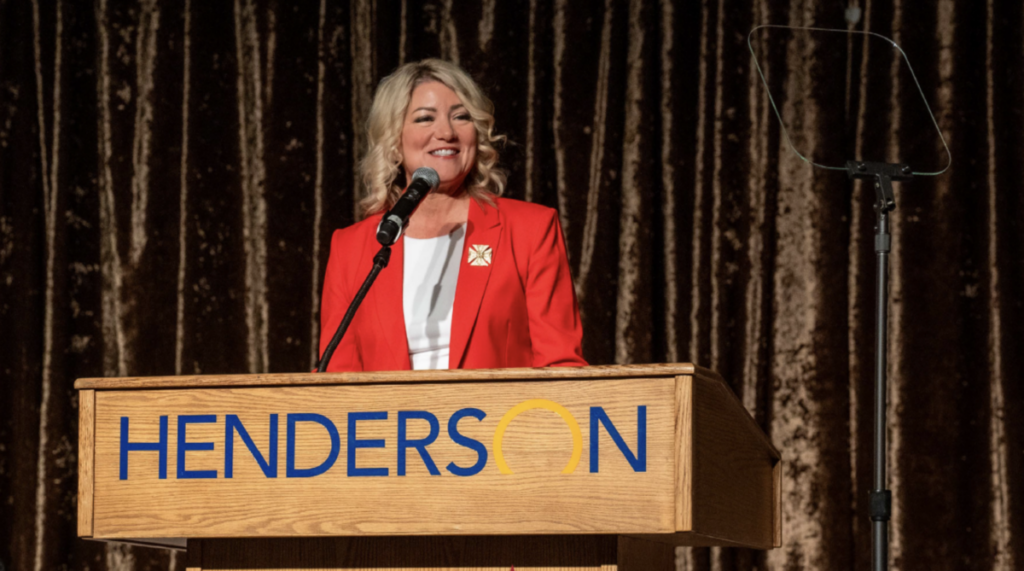
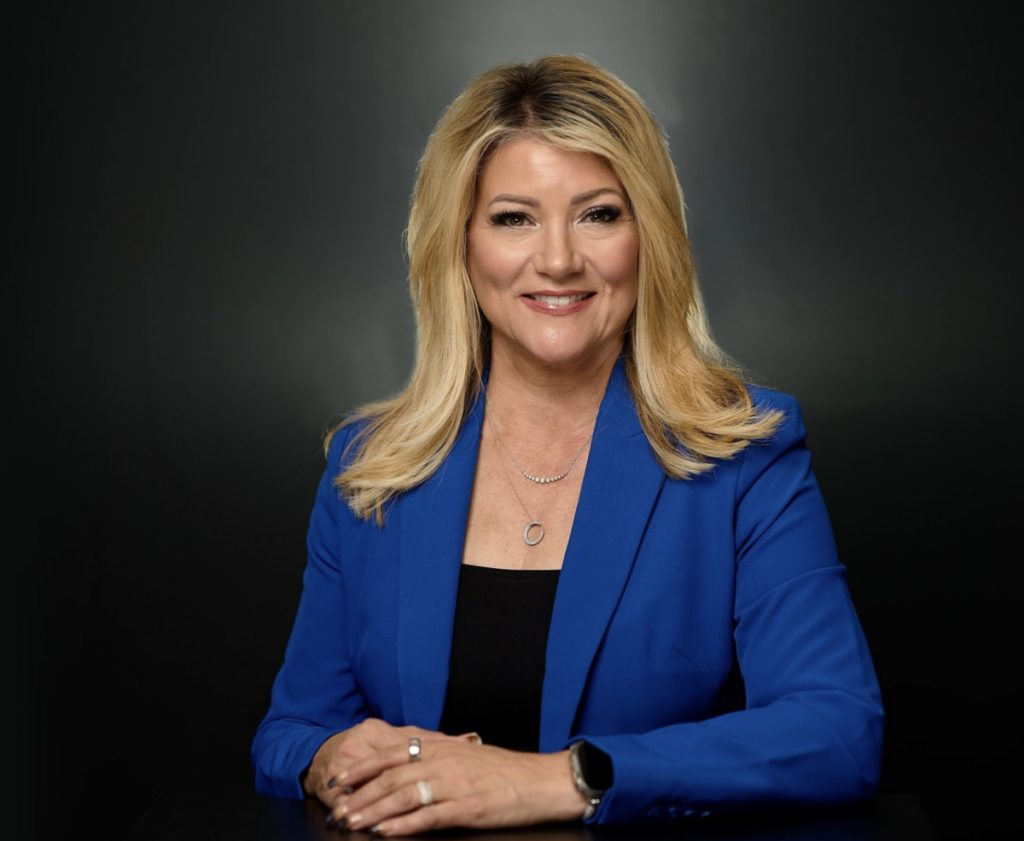
Meet Michelle Romero
Marketer on the Run: Tell us about yourself.
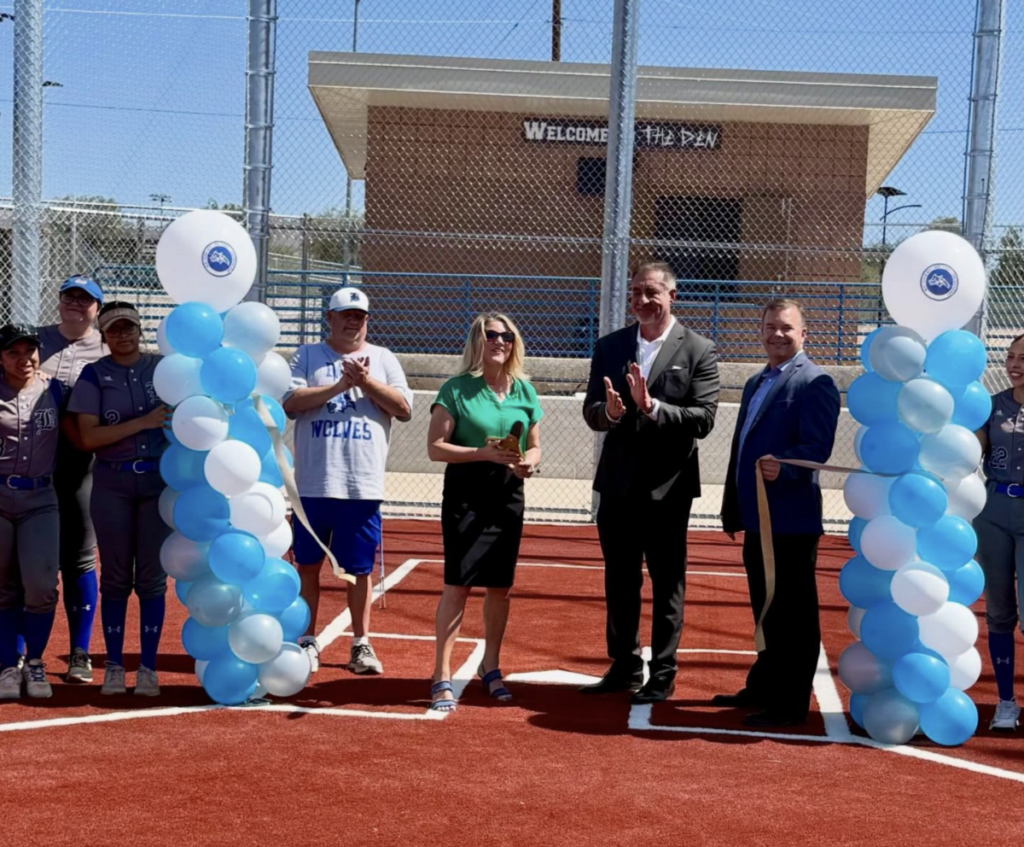
Michelle Romero: I have lived in Henderson since birth. I met my husband in high school, and we have been married 40 years this June. My husband served in the Army the first six years of our marriage. I have four wonderful sons, who each have lovely wives, and now have 11 grandchildren. My mother and father taught me that service to others was of the utmost importance, and that I should leave a place better than I found it. As a result, I have spent my entire adult life serving this community.
I retired from the City of Henderson after 25 years. Most of that service was in Redevelopment, where I worked successfully to remove blight and barriers to improvement and to attract investment, jobs, amenities and businesses to the more mature parts of our city.
My most successful project was Water Street District, where my team and I laid the groundwork for the vibrant and active downtown we have today.
RELATED: SELLING HENDERSON: MEET MAYORAL CANDIDATE HOLLIE CHADWICK
MOTR: When people think of Henderson 10 years from now, what do you want them to say about the city?
MR: I want them to say they are proud to live in a thriving, safe, family-friendly community. When I was growing up in Henderson, the city was very different from the one you see today. There was very little commerce at all. It was a bedroom community with a large industrial plant with less than ideal emissions at its center. People called it “Hendertucky” and made fun of the kids who attended Basic High School for being on the “wrong side of the tracks.”
Now we have robust economic diversity with headquarter companies, professional sports teams, 77 beautiful parks, 300 miles of trails, 8 recreation centers, and we have been designated one of the safest cities in America numerous times.
Our city is clean, with smart planning, sound infrastructure, and national surveys (which are done every two years) show that Henderson scores 40% higher than the next closest city of similar size in quality of life and city services.
Ten years into the future, I want Henderson to be nationally recognized as a premier location for your family to live in safety, your business to flourish, for education, career and entrepreneur opportunities and for quality of life measures.
MOTR: What is the one thing Henderson should be known for nationally—and do you think we’re there yet?
MR: Henderson is known for many things nationally—including as one of the safest cities in America, for its high quality of life and master planned communities, government excellence as a winner of the Malcom Baldridge Award (something only four other cities have achieved in our country’s history), sports and training with multiple professional teams, and easy access to outdoor recreation.
Henderson is regularly recognized as a leader in each of these categories and often hosts leaders from communities around the country who want to better understand how these outcomes have been achieved.
RELATED: HOW THE WAR IN IRAN WILL IMPACT LAS VEGAS AND BEYOND
MOTR: What makes Henderson truly different from other fast-growing cities like Scottsdale, Dallas suburbs, or parts of Florida competing for families and businesses?
MR: Henderson is actually a community, where although we are growing, people still come together to celebrate, and to support one another and our public safety officers. Our businesses are actually part of the fabric of our community and support those most in need regularly through volunteering, grants and other support.
Great weather most of the year, low taxes, support for innovation and business, sports and proximity to the entertainment capital of the world make Henderson truly different.
MOTR: Why should a young family choose Henderson over those places?
MR: Henderson has earned the national gold medal for parks and recreation twice; and has been a national finalist numerous times. We have opportunities for youth sports, arts and culture. Henderson’s schools rank significantly higher than those in the surrounding valley—one third of all five-star schools in Clark County are in Henderson, and there are multiple colleges and universities as well. Henderson has the lowest taxes, highest property values and highest quality of life of any city in Nevada.
MOTR: What are we under-leveraging right now as a city—assets, opportunities, or advantages that we’re not fully capitalizing on?
MR: Most people don’t know that the Lincy Institute recently did a study that showed Southern Nevada was fifth in the nation for start-up businesses and innovation technologies. The tax structure and pro-business approach in Henderson makes it very welcoming for both the business and technology innovators and the venture capitalists needed to help fund them. This is something that is a focus for the City’s Economic Development team.
MOTR: What is the biggest risk to Henderson’s long-term growth and reputation?
MR: While I am proud of all the work we have done to grow and diversify our economy in Henderson, just as other state leaders have done throughout the state, Nevada remains heavily reliant on our top economic industry – tourism, gaming, and hospitality. That means, as we have seen through previous economic downturns, Nevada and our local communities take a significant hit when the nearly 40 million visitors don’t have the disposable income to visit our state.
That is why it takes Nevada longer to recover than other states if and when an economic recession hits. It is also why I work so hard on our economic diversification efforts, along with maintaining strong fiscal prudence on our spending obligations.
The biggest threat to our long-term growth and reputation would be not adequately preparing for these national (and often, global) economic downturns. I am very confident that the things we have direct control over in Henderson, we can and will do well. When national economic downturns occur, out of our control here in Henderson, we can better absorb these difficulties by continuing to diversify our economy and focus on thoughtful planning and budgeting at City Hall.
RELATED: DOORDASH’S TRUMP STUNT SHOWS BACKLASH ISN’T FAILURE, IT’S PROOF THEY BROKE THROUGH
MOTR: Where is the city currently falling short for residents today?
MR: Henderson follows a strategic plan that is updated every four years after receiving input from residents. There are currently five strategic priorities: Public Safety, Quality Education, High Performing Public Service, Healthy, Livable, Sustainable Community, and Economic Vitality. These priorities are used to prioritize budgets and resources and to evaluate progress in each area. The city then uses an independent, nationally recognized company to perform a statistically valid poll to residents on every aspect of public services, value of those services and quality of life.
Year after year, residents have indicated very high satisfaction rates with all services and for quality of life. Further, in the off years, business owners are polled for the same type of feedback with similar results. In no area have residents rated Henderson as falling short. However, there is always room for improvement—especially with traffic management and road repairs, which are a necessary inconvenience for residents.
MOTR: What is something people assume is working well in Henderson that you believe actually needs to be rethought?
MR: Many government entities, agencies, services, etc. are implementing AI in positive, cost-savings ways, while others are struggling to understand it. While there are definite opportunities to capitalize on AI to further improve services to all stakeholders in our community, before fully implementing AI programs, it cannot be considered simply an IT upgrade.
First, Henderson would need to consider what problem would be solved (faster permitting, better traffic flow) and what measurable outcomes would prove success. Next, legal, ethical and constitutional safeguards would need to be researched and put in place. Further, data governance would need to ensure accurate, complete and current information was stored in a safe manner with privacy protections in place. These are just a few of many considerations that would need to occur before AI could be fully embraced by the City.
MOTR: How do you protect Henderson’s identity while being located next to one of the most recognizable cities in the world?
MR: Henderson has an established, recognizable and respected identity in its own right. Henderson’s family-friendly, high quality of life must be protected by demanding high standards of new development and ensuring infrastructure and public safety keeps pace with steady, manageable growth.
MOTR: Should Henderson lean into its proximity to Las Vegas as part of its identity, or intentionally distance itself? What’s the smarter strategy?
MR: Henderson should absolutely lean in. Las Vegas is the sports and entertainment capital of the world, that draws visitors and attention through its many events, conventions and world-renown hospitality. It balances nicely with Henderson’s family-centered dynamic. Business and industry is often exposed to Henderson because of happenings in Las Vegas and the two cities work very well together.
MOTR: If you had an unlimited budget specifically to attract new families to Henderson, how would you allocate it?
MR: If the goal was specifically to attract families, I would fund additional parks and recreation facilities and personnel, add more public safety officers and invest in our charter school program to bring additional educational options for families.
RELATED: THE LINE BETWEEN REAL AND FAKE IN CAMPAIGN ADS IS ALREADY GONE
MOTR: What types of businesses should Henderson actively recruit over the next decade—and which types should we avoid?
MR: Henderson has a phenomenal Economic Development team who not only focuses on recruiting, but also retaining existing businesses. We have a dynamic target industry analysis tool that identifies in-demand industries, along with emerging trends and changes in the economy to develop specific targets for recruitment efforts.
Businesses must provide livable wages, upward mobility for employees and provide goods or services needed in our community while being respectful of our natural resources. Our current key targets are: Financial and Credit Services, Back Office Management and Support Services, Media and Sports Production, Logistics Management, and Electrical Equipment and Components Manufacturing.
We should avoid those industries that are high water or power users, take up a large amount of land without employing a significant number in good-paying jobs, or are likely to be obsolete in the near future.
MOTR: What story should we be communicating about Henderson that we are not telling effectively today?
MR: Henderson just graduated its largest police academy ever and has a new class with even more recruits starting May 4. By the time this class graduates, Henderson will be at or very close to zero vacancies for the first time in decades. Additionally, three-year contracts have been signed with both the police officers and police supervisors unions, making them the highest-paid in the valley.
Through some reorganization of resources by the new police chief, there are now significantly more officers on the streets, resulting in decreases in crime in all categories, and an even safer Henderson.
MOTR: How do you balance growth with maintaining the quality of life that current residents expect?
MR: Balancing growth and maintaining quality of life happens when there is constant communication between leaders and residents and the highest levels of transparency in government. Under my leadership, a series of informal meetings with elected officials are offered throughout the year, giving residents the opportunity to ask questions, inform officials of issues, and provide suggestions and ideas for a better city. In 2025 alone, 88 public meetings—outside of formal city council meetings—were held. Additionally, Henderson’s “checkbook” is online an available for all to review where funds are being spent.
MOTR: What does “responsible growth” actually look like in practice under your leadership?
MR: In the late 90’s and early 2000’s, Henderson was growing at double-digit rates. This made it extremely difficult to grow in a manner that allowed for adequate resources and infrastructure. Over the past three years, the growth rate is between 1.5-2.5 percent. This allows for infrastructure, public safety and amenities to keep pace with growth, while maintaining a balanced budget.
Additionally, Henderson maintains an 80/20 ratio of single-family homes to multi-family units, allowing options for residents with varying preferences and keeping a reasonable balance throughout the city.
MOTR: Where do you draw the line between expansion and preservation?
MR: As available land becomes more scarce, infill development will become more necessary. Henderson has a long history of successful redevelopment throughout the city, repurposing existing buildings and re-invigorating aging areas. Redevelopment professionals also understand how and when it is appropriate and financially responsible to preserve the built environment. Water Street is a prime example of redevelopment at its finest.
MOTR: In 10 years, what is one measurable outcome that would prove your leadership was successful?
MR: Henderson resident’s income growth will outpace the nation because I have prioritized education, jobs, innovation, and quality of life for now and into the future.
MOTR: If you had to pitch Henderson in one sentence to both a young family and a business owner, what would you say?
MR: Henderson has the highest bond rating, best schools, most beautiful and numerous parks, highest property values and lowest property taxes of any city in Nevada.
MOTR: What is one word you’d use to describe Henderson?
MR: Community
You can learn more about Michelle Romero by clicking here.
HENDERSON DECIDES
Cities do not grow by accident. They grow when leadership understands what the city is, what it is not, and has the discipline to build within that reality over time.
What you’ve just read is one perspective on that future.
Each candidate in this series was asked the same set of questions and given the same opportunity to define how they would position Henderson in a competitive national landscape. Their responses are presented as submitted, with edits made only for clarity and flow. There has been no interpretation, reframing, or filtering of their views.
The goal of this series is not to tell you what to think. It is to give you a clearer understanding of how the individuals seeking to lead this city think about growth, identity, and long-term positioning.
Henderson is already a strong city by most measurable standards. The question is whether it evolves into a dominant one—one that attracts not just residents, but attention, investment, and long-term commitment from the people and businesses choosing where to build their future.
DISCLAIMER: This series does not constitute an endorsement of any candidate. Every declared candidate for mayor was invited to participate in this project. We would like to thank the Mayor for her participation in this series.
RELATED: INSIDE ENTREPRENEUR ASHLEY GILL’S VISION FOR FIBRE SALON