
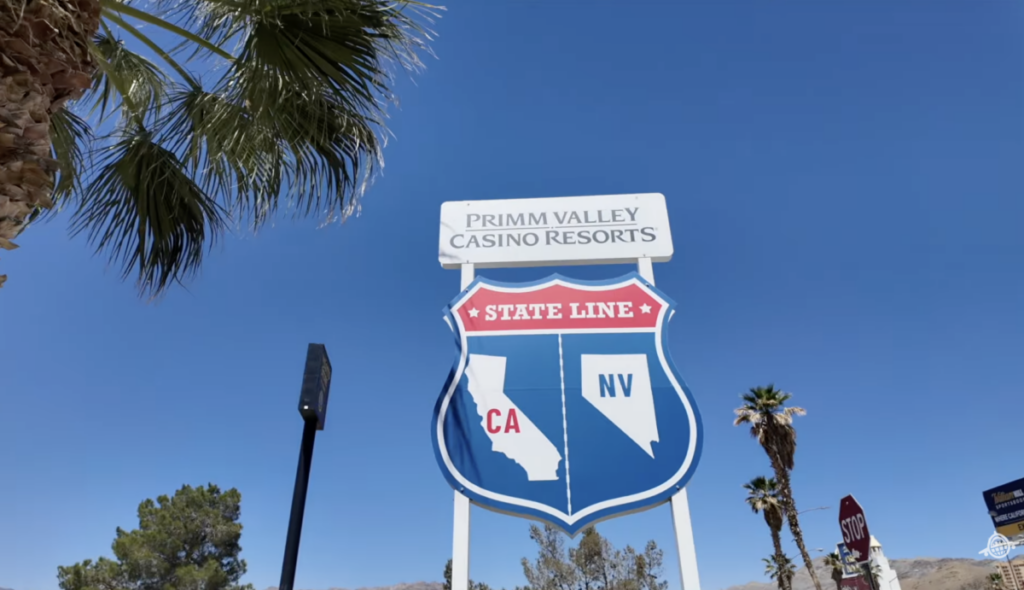
Primm’s casino closures are more than a regional business story. They show what happens when a once-powerful convenience advantage erodes, customer behavior changes, and operators fail to rebuild the broader ecosystem that made the destination valuable in the first place.
A border-town business model runs out of road
For years, Primm worked because it occupied a strategic position on Interstate 15 between Southern California and Las Vegas. Its casinos, dining options, outlet shopping, and roadside amenities turned a stopover into a mini-destination for travelers who wanted value, novelty, and a break before reaching the Strip.
That formula weakened over time, but the real break became impossible to ignore after the pandemic. Traffic patterns changed, visitation became less consistent, and the steady stream of customers needed to support multiple full-scale casino properties no longer returned in the same way.
Why the closures happened
The simplest explanation is that Primm lost the protected position it once had. Operators and local reporting point to weak demand, uneven recovery after COVID, and a customer base that no longer had to drive to the Nevada border for the same kind of gaming experience.
One major pressure point was competition. Tribal casinos in California expanded and improved, giving Southern California customers newer and closer alternatives that reduced Primm’s long-standing location advantage.
Another factor was the loss of supporting attractions. As outlet retail, food options, and other traveler-oriented amenities shrank, Primm became less compelling as a stop, which likely reduced dwell time, cross-spending, and repeat visits.
Ownership decisions reflected those realities. Temporary shutdowns, limited operations, and property consolidation suggest management was trying to preserve value while cutting losses, but those measures did not solve the underlying demand problem.
Here is a great video by a local YouTuber by the way, definitely worth a watch.
RELATED: WHY CUSTOMERS TRUST INFLUENCER MARKETING MORE THAN BIG BRANDS
The economic impact reaches beyond the casino floor
The first impact is employment. Reporting on the closures points to layoffs affecting hundreds of workers, and those losses matter in a small corridor economy where a few large employers shape the local labor market.
The second impact is on surrounding commerce. Casinos in a place like Primm do not operate in isolation; they help drive spending at convenience stores, fuel stops, restaurants, retail, and related businesses that benefit from traveler traffic.
The third impact is fiscal and developmental uncertainty. Once a tourism-dependent cluster starts shutting down, the land may eventually find another use, but redevelopment takes time, capital, and a credible thesis for future demand.
RELATED: YOUR NEXT CUSTOMER MIGHT NOT BE HUMAN, IT MIGHT BE AN ALGORITHM
The deeper marketing lesson
Primm’s decline is a reminder that convenience is not the same thing as brand resilience. A business can dominate for years because of geography, timing, or limited competition, but those advantages are fragile when customers gain better alternatives.
That matters far beyond casinos. Many businesses believe their lead is secure because they are easier to access, better located, or locally familiar, yet those strengths can weaken fast when competitors improve distribution, customer experience, or proximity.
The stronger lesson is that brands need a reason to be chosen beyond habit. When a business becomes dependent on pass-through traffic or one legacy customer segment, it is vulnerable to structural change that may look temporary at first but becomes permanent over time.
RELATED: THE PINBALL LOUNGE REWRITING WHAT BOULDER CITY ENTERTAINMENT LOOKS LIKE
What businesses should learn from Primm
1. Never mistake traffic for loyalty
Primm benefited from being on the way. That is useful, but it is not the same as having a customer relationship strong enough to survive when the route changes or better options emerge nearby.
Businesses should separate convenience-driven demand from true loyalty in their own reporting. If most customers choose a company because it is nearby, familiar, or part of an old routine, that advantage should be treated as temporary unless it is reinforced by a differentiated experience.
2. Protect the full customer ecosystem
A destination is rarely powered by one attraction alone. In Primm’s case, the value came from a cluster of experiences working together, and when that ecosystem weakened, the whole proposition became less attractive.
For brands, this means supporting every part of the journey that increases engagement and spend. Content, partnerships, events, service design, retail add-ons, and hospitality layers can all strengthen the overall value proposition.
3. Watch competitive encroachment early
Primm’s model became harder to sustain once competing casinos closer to Southern California customers improved their own offerings. By the time a convenience moat disappears, the recovery path is usually more expensive and less certain.
Businesses should track not only direct rivals but also substitute options that reduce the need to choose them at all. The most dangerous competitor is often the one that makes the original trip, click, or visit feel unnecessary.
4. Use operational caution, but not strategic delay
Temporary closures and reduced operations can buy time, but they do not automatically create a turnaround. If the market shift is structural, delay can drain attention and capital without restoring relevance.
The better approach is to define thresholds in advance. When traffic, conversion, or retention falls below a certain level for a sustained period, leadership should decide whether to reinvest aggressively, reposition the offer, or exit with discipline.
5. Reinvention has to be visible to the customer
Even when management recognizes decline, internal cost controls are not enough if customers do not see a new reason to return. A reduced operation may preserve cash in the short term, but it can also reinforce the perception that the business has lost momentum.
Marketing cannot fix a broken model by itself, but it can help signal reinvention when the business truly changes. That requires new product logic, a sharper audience strategy, and messaging built around relevance rather than nostalgia.
WATCH:
What this means for business owners now
A practical response starts with an audit of where demand actually comes from. Companies should know how much revenue depends on one geography, one traffic source, one referral channel, or one outdated customer habit.
The next step is to identify whether the business offers a compelling destination or merely a convenient stop. If the answer is the latter, the priority should be building a stronger experience, stronger partnerships, and stronger differentiation before market conditions force the issue.
Primm is a local business story, but it is also a broader warning. Markets do not collapse only because customers disappear; they often collapse because the original reason to choose a business quietly stops mattering and nobody rebuilds the brand around what customers value now.
RECOMMENDED: THE 2026 WORLD CUP AND THE RISE OF “AMBUSH AUTHENTICITY”