
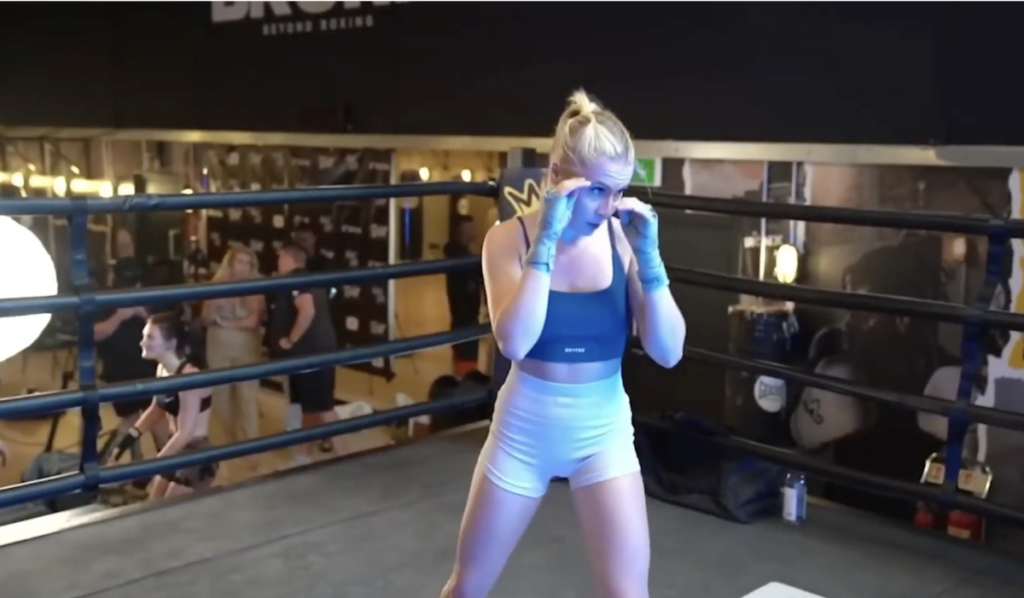
What influencer boxing reveals about attention, leverage, and why brand is the real asset
Jake Paul didn’t win his fight against Anthony Joshua, but from a business perspective, he didn’t lose either.
Despite being stopped in the sixth round and later revealing he suffered a broken jaw, Paul reportedly walked away with a purse estimated in the tens of millions of dollars, depending on backend participation, platform guarantees, and revenue splits. Exact figures are rarely disclosed in modern boxing, but industry reporting converged on the same conclusion:
This was one of the most lucrative single-night paydays in the sport’s history.
That reality exposes something bigger than one fight. It explains why influencer boxing exists, why it keeps working, and why building a brand has become one of the most powerful forms of leverage in modern business.
Jake Paul, by the Numbers
Before analyzing the model, it’s worth grounding this in outcomes — not opinions.
Reported and estimated results from Paul-led events include:
- Estimated fight purse: $80–$100 million (reported range)
- Live fight time: just over 16 minutes
- Estimated earnings per minute: $5–6 million
- Tens of millions of global viewers across broadcast, streaming, and digital replay
- One of the most-bet combat sports events of the year, with estimated global wagering in the hundreds of millions of dollars
For context:
- A strong traditional boxing PPV typically sells 300,000–500,000 buys
- Many championship boxing matches struggle to reach 1–2 million total viewers
- Even marquee UFC events average 700,000–900,000 PPV buys
Paul’s events don’t just compete with typical boxing matches, they compete with entertainment at large.
Before Influencer Boxing, Boxing Was Stuck in Neutral
Long before Jake — and later his brother Logan — entered the ring, boxing wasn’t short on talent. It was short on relevance.
Multiple sanctioning bodies diluted championships. Promoters fought each other instead of collaborating. Fight schedules were opaque. Younger audiences drifted toward MMA, esports, and creator-driven entertainment.
Boxing wasn’t dying, but it was losing cultural gravity.
Influencer boxing didn’t arrive to replace boxing, it arrived to solve a distribution problem boxing refused to confront.
What Influencer Boxing Actually Is — and Why It Works
Influencer boxing flips the traditional sports funnel.
Traditional boxing tries to manufacture interest after a fight is announced. Influencer boxing monetizes pre-existing attention.
At its core:
- fighters arrive with built-in audiences
- rivalries and personas already exist
- the fight is simply the highest-stakes episode
The bout isn’t the product, it’s the distribution mechanism.
For audiences raised on YouTube, TikTok, and streaming, this feels intuitive — because it mirrors how they already consume entertainment.
How Influencer Boxing Is Helping Boxing — Not Hurting It
The loudest critics argue influencer boxing cheapens the sport. The evidence points the other way.
1. It rebuilt the top of the funnel.
Millions of first-time viewers learned how boxing cards work, stayed for undercards, and followed professional fighters afterward.
2. It forced better storytelling.
Belts and rankings stopped being enough. Promoters were pushed to build narratives, personalities, and long-term arcs.
3. It created economic oxygen.
Bigger gates and larger audiences meant higher undercard paydays and broader exposure.
4. It normalized women’s boxing at scale.
Women’s bouts stopped being novelties and became expected attractions with real commercial upside.
Influencer boxing didn’t cannibalize demand.
It expanded the audience.
Jake Paul Is a Brand First, a Fighter Second — and That’s the Point
Jake Paul entered boxing with something most fighters never have: control over distribution.
As of late 2025, his audience footprint included:
- 25+ million Instagram followers
- 20+ million YouTube subscribers
- 18+ million TikTok followers
- 4+ million followers on X
- 65+ million cumulative followers across platforms
That audience isn’t passive. It’s trained to convert attention into action.
That inversion explains:
- his leverage with promoters
- his appeal to platforms
- why losses don’t diminish his earning power
When you own the audience, you don’t audition, you negotiate.
Andrew Tate & Misfits Mania: The Model Scales Beyond Jake Paul
The clearest proof that this isn’t a one-man anomaly came the very next day.
While the sports world was still processing the Jake Paul–Joshua event, Misfits Boxing staged MF Mania – The Fight Before Christmas — and demonstrated that the influencer boxing model now operates as a repeatable system, not a novelty.
Misfits announced Andrew Tate as its new “CEO,” with co-founder Mams Taylor framing the move as a step toward placing Misfits “on the world stage.” Tate’s boxing debut against Chase DeMoor was booked as a heavyweight title bout, positioned not as a sideshow but as a headline narrative.
Just as importantly, Misfits changed distribution strategy.
Instead of its usual DAZN-style approach, the event streamed exclusively on Rumble Premium, accessible only via a paid annual subscription.
From a marketing standpoint, this mirrored the Paul playbook:
- personality-driven stakes
- leadership storyline
- platform exclusivity
- subscription-first economics
Some coverage was critical. Some skeptical. But nearly all of it did the same thing: amplified the Misfits brand name.
That’s the lesson.
Approval isn’t required. Attention is.
Why Platforms Keep Saying Yes
For Rumble, the Misfits partnership functioned as a flagship exclusive — a way to test influencer-driven live sports as a subscription-growth lever.
Investor and business coverage framed the event as:
- an “attention-grabbing exclusive”
- a clear experiment in driving paid subs
- a differentiator in an increasingly crowded streaming market
There are no public figures yet tying this single event to subscriber lifts — and overclaiming would miss the point anyway.
The value wasn’t guaranteed ROI. It was visibility, positioning, and optional upside.
Netflix. Rumble. DAZN. Different platforms, same logic: audience first, content second.
Influencer Boxing and Women: Where Attention Finally Met Opportunity
One of the most overlooked impacts of influencer boxing is how dramatically it altered the trajectory of women’s participation and visibility in the sport.
For decades, women’s boxing suffered from a familiar problem: talent without promotion. Elite fighters existed, but they were rarely treated as must-watch events. Cards were under-marketed, storylines were thin, and exposure was inconsistent. The issue wasn’t skill — it was distribution.
Influencer boxing didn’t fix that by changing the sport. It fixed it by changing who the audience showed up for — and why.
A different entry point for women
Influencer boxing created a parallel on-ramp where female fighters and creators didn’t need institutional backing first. They needed:
- an audience
- a narrative
- a reason for people to care before the bell rang
Once that threshold was crossed, the rest followed.
Several women demonstrated that this wasn’t a novelty lane — it was a scalable one.
Elle Brooke: Proof of repeatability
Elle Brooke became one of the clearest examples that female influencer boxing could sustain interest beyond a single viral moment.
She:
- headlined and co-headlined multiple Misfits cards
- returned consistently, not sporadically
- trained and competed with visible seriousness
What mattered wasn’t just her popularity — it was durability. Brooke showed promoters that women’s influencer bouts could:
- draw reliably
- hold audience attention across events
- justify top-card placement
That repeatability is what turns attention into a business.
Astrid Wett: Audience expansion, not substitution
Astrid Wett entered influencer boxing with a large social following and immediately proved another key point: new audiences don’t dilute a sport — they expand it.
Her fights:
- pulled in viewers who did not follow boxing at all
- generated viral clips that circulated far beyond fight-night broadcasts
- increased engagement on cards that otherwise would not have reached those demographics
From a marketing standpoint, Wett demonstrated that female influencer boxing:
- introduces boxing to non-traditional fans
- increases total attention rather than reallocating existing viewers
- makes women’s bouts culturally relevant in digital spaces boxing historically struggled to reach
That’s not cannibalization. That’s growth.
Paige VanZant: Distribution unlocks credibility
Paige VanZant’s involvement highlighted a different lesson.
Unlike many influencer boxers, VanZant arrived with legitimate combat sports credentials from MMA. Yet even with that background, traditional fight promotion had failed to fully capitalize on her popularity.
Influencer-led promotion finally aligned:
- her athletic legitimacy
- her social reach
- her commercial value
Her presence reinforced a critical insight:
influencer boxing isn’t anti-skill — it’s pro-distribution.
When distribution is solved, credibility compounds instead of stagnates.
Why the Money Works — Even When the Fighter Loses
Jake Paul didn’t monetize victory.
He monetized anticipation.
By fight night:
- PPVs were sold
- sponsorships activated
- bets placed
- audiences locked
The outcome affected rankings.
The event affected revenue.
In modern entertainment, revenue is the scoreboard.
Influencer Marketing Beyond Endorsements
Most brands think influencer marketing means renting someone else’s audience.
Influencer boxing shows the deeper model:
- the influencer is the platform
- the audience is reusable infrastructure
- attention compounds across ventures
This isn’t advertising. It’s business architecture.
The Real Takeaway for Founders and CEOs
The mistake is asking whether Jake Paul “belongs” in boxing.
The better question is:
Why does he command more economic leverage than athletes with superior credentials?
The answer is brand.
Brand creates:
- pricing power
- optionality
- resilience after losses
- leverage with platforms
In an economy where attention is scarce, distribution beats credentials.
Jake Paul didn’t win the fight.
But he won the business model.
And that lesson applies far beyond the ring.
Inspired?
If you’re tired of guessing what’s actually working in your marketing—and would rather have someone who sees the whole board—reach out to schedule a discovery call. We’ll tell you plainly whether we can help, and what to do next.