
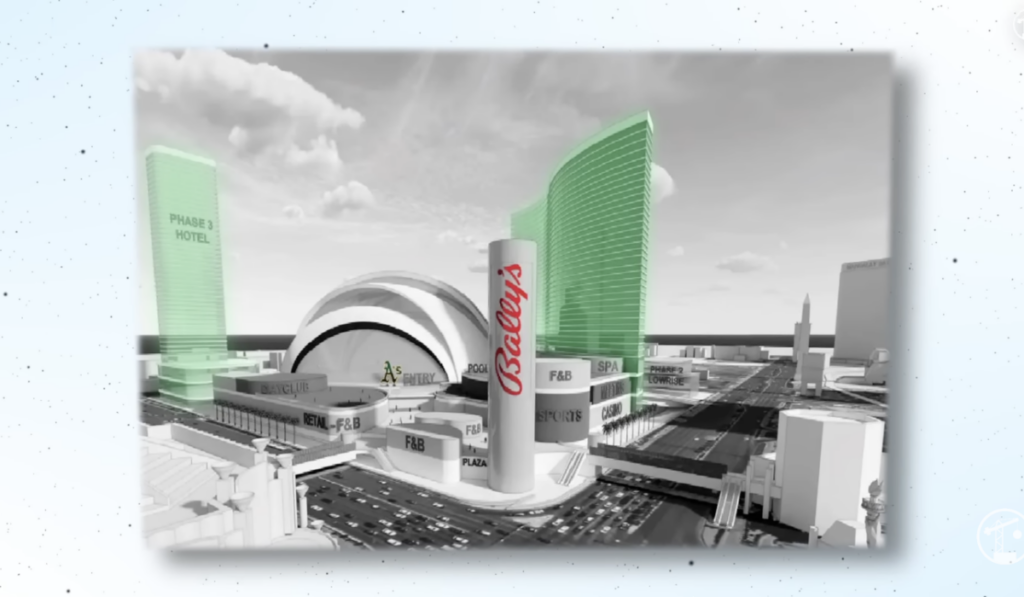
Most people are looking at the Oakland A’s planned Las Vegas Strip ballpark as a sports story. That’s a mistake.
From a marketing and sponsorship perspective, the A’s roughly $2 billion stadium project is shaping up to be one of the most valuable long-tail brand platforms in the country—and not because of baseball.
With a projected 2028 opening, Clark County approval to request up to $380 million in public funding, and years of regulatory and oversight milestones still ahead, this project isn’t moving fast. That’s precisely what makes it interesting.
A Stadium Built on Time, Not Urgency
Public documents and briefings around the ballpark have focused heavily on environmental compliance, stadium authority oversight, and financial safeguards. That framing matters.
Instead of rushing toward opening day hype, the A’s and Las Vegas officials are positioning the project as:
- A civic asset
- A tourism driver
- A long-term economic development anchor for the Strip
That creates a multi-year runway where sponsorship conversations don’t have to be transactional. Brands aren’t being asked, “Do you want signage on a stadium?” They’re being invited into something bigger.
Why This Is a Sponsor’s Dream Scenario
Most stadium sponsorships suffer from the same problem: short attention cycles.
A naming rights deal is announced. There’s a brief media spike. Then the logo fades into the background, only resurfacing on game days.
The A’s Strip ballpark flips that dynamic.
Because of the extended timeline to 2028, sponsors can plug in early and benefit from:
- Years of construction updates
- Tourism-focused media coverage
- Political and civic storytelling
- Las Vegas destination branding
- Pre-opening activations tied to major events on the Strip
In other words, this isn’t a one-season sponsorship. It’s a multi-year narrative arc.
“Vegas as a Destination” Is the Real Asset
The smartest move here is how the project is being framed.
This isn’t just “A’s baseball in Las Vegas.” It’s:
- “Vegas continues to reinvent itself”
- “A new world-class destination is coming”
- “The Strip evolves again”
That gives sponsors political and reputational cover. Brands can tie themselves to:
- Tourism growth
- Infrastructure investment
- Job creation
- Sustainability and compliance
- The global Vegas brand
That’s a much safer—and broader—association than aligning with a single team’s win-loss record.
The Long Game Wins
For brands that understand modern sponsorship, the value isn’t opening night. It’s the years before.
The companies that lock in founding partnerships, category exclusivity, and naming considerations early will benefit from:
- Repeated earned media mentions
- Government and tourism endorsements
- Integration into Vegas-centric storytelling
- Visibility across sports, hospitality, and entertainment audiences
By the time first pitch is thrown in 2028, those brands won’t be “new sponsors.” They’ll be part of the project’s identity.
Marketing Takeaway
The A’s Strip ballpark isn’t just a stadium—it’s a long-tail sponsorship platform disguised as a sports venue.
Brands that approach it as a tourism, civic, and destination play will extract far more value than those waiting for the ribbon cutting. In Las Vegas, the real win isn’t showing up on opening day, it’s being part of the story long before anyone buys a ticket.