
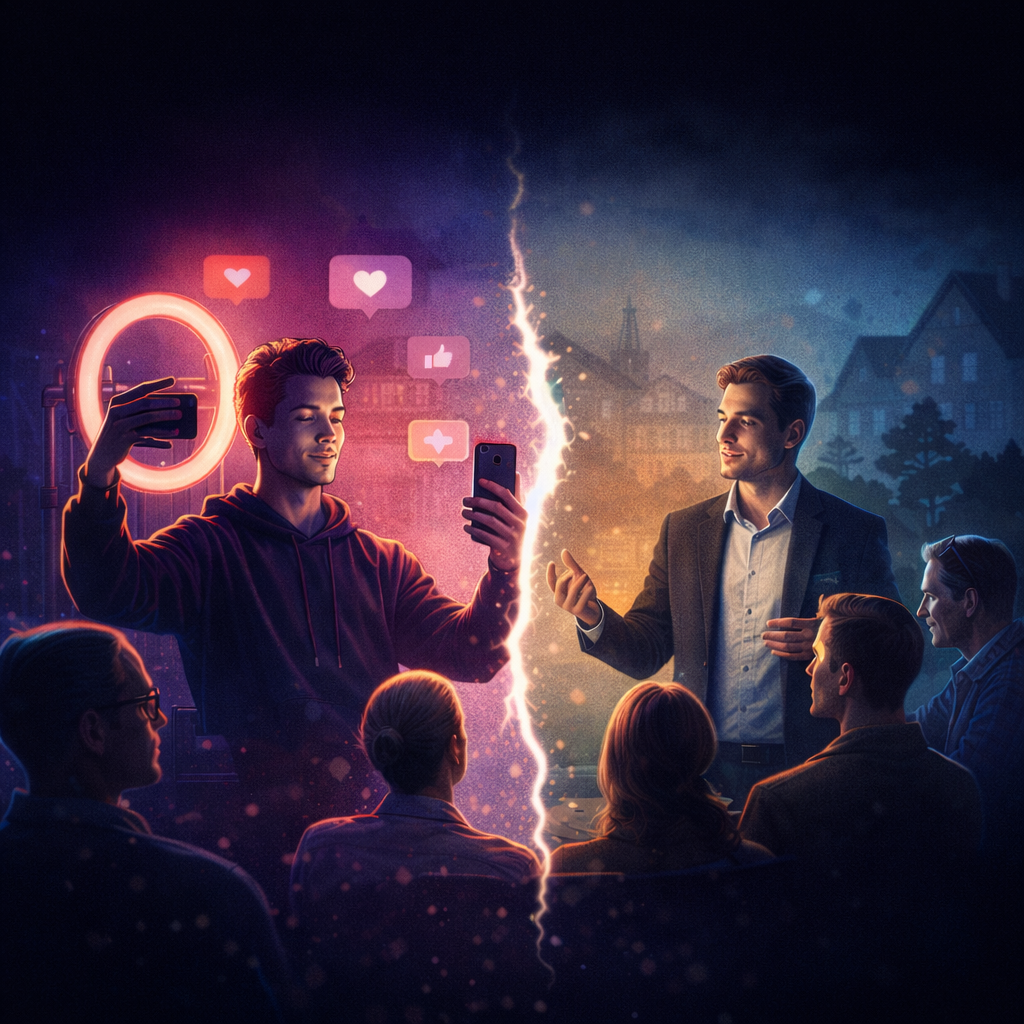
The marketing world has spent a decade chasing the scroll. We optimized for the dopamine hit, the three-second hook, and the infinite feed. But in February 2026, the data shows a stark reversal. Digital sobriety is no longer a niche wellness trend. It is a mass-market migration.
As Gen Z and Alpha lead a retreat from the noise of algorithmic discovery toward Deep Social (private, invite-only, and high-trust spaces) the era of mass reach has officially hit a wall. When your audience intentionally logs off, you cannot follow them with any kind of retargeting strategy.
The Great De-Platforming is here, and it demands a total pivot from being a content creator to becoming a community utility.
The Death of the Passive Scroll
For years, brands relied on the interruption model. We assumed that if we bought enough impressions on TikTok or Instagram, we could wedge our way into the consumer’s consciousness. But the rise of digital detox tourism and “purpose-only” platform usage suggests that consumers are no longer willing to be passive recipients of noise.
The new status symbol isn’t how many followers you have; it’s how little time you spend on the grid.
In this environment, an ad is an intrusion into a rare and guarded moment of attention. If a brand wants to be part of a consumer’s life in 2026, it can no longer afford to be a distraction. It must provide a reason to engage that feels essential and purposeful.
From Content Creator to Community Utility
Most marketing budgets are still heavily weighted toward digital production like videos, graphics, and copy designed to feed the machine. But as users migrate to smaller, un-searchable communities like private Discords, specialized Slacks, or localized physical hubs, that content loses its delivery mechanism.
To survive, brands must shift from making things people watch to building things people use.
Becoming a community utility means asking: What problem are we solving for this specific group of people that justifies their digital time?
- B2B brands are moving away from gated whitepapers toward hosting unplugged executive retreats where the value is the lack of Wi-Fi and the presence of peer-to-peer connection.
- Consumer brands are shifting budgets from influencer whitelisting to Slow Living sponsorships by funding community gardens, tool-sharing libraries, or mobile-free quiet zones in urban centers.
The Rise of the IRL Infrastructure
If the digital world is becoming a place of sobriety, the physical world must become the new frontier of brand storytelling. We are seeing a massive surge in IRL (in real life) experiences that prioritize presence over post-ability.
The goal is no longer to create an Instagrammable moment. In the age of digital sobriety, that feels performative and dated. The new goal is to create an Unplugged Zone where the brand facilitates a deep, focused experience that requires the phone to stay in the pocket.
Marketing in 2026 is becoming an exercise in infrastructure. You aren’t buying an ad slot, you are building a pop-up park, a local workshop, or a private dinner series. You are providing the physical hardware for the community’s social software.
The Strategic Pivot: Measuring Depth, Not Width
The transition to digital sobriety is terrifying for organizations built on the myth of infinite scale. You cannot scale a 12-person private dinner the way you can scale a Facebook ad. But the depth of influence in that small room is 100x more potent than 10,000 drive-by impressions.
Marketing teams must reckon with the fact that “Total Reach” is a declining asset. The new KPIs are centered around:
- Utility Score: Does this brand facilitate a necessary connection or solve a physical-world problem?
- Community Retention: How many people are returning to our private spaces without an ad-based reminder?
- Offline Attribution: Can we track the correlation between our IRL investments and long-term brand advocacy?
The Great De-Platforming isn’t the end of marketing. It is the end of lazy marketing. The brands that will thrive are those that realize when people log off, they aren’t disappearing. They are just going somewhere more meaningful.