
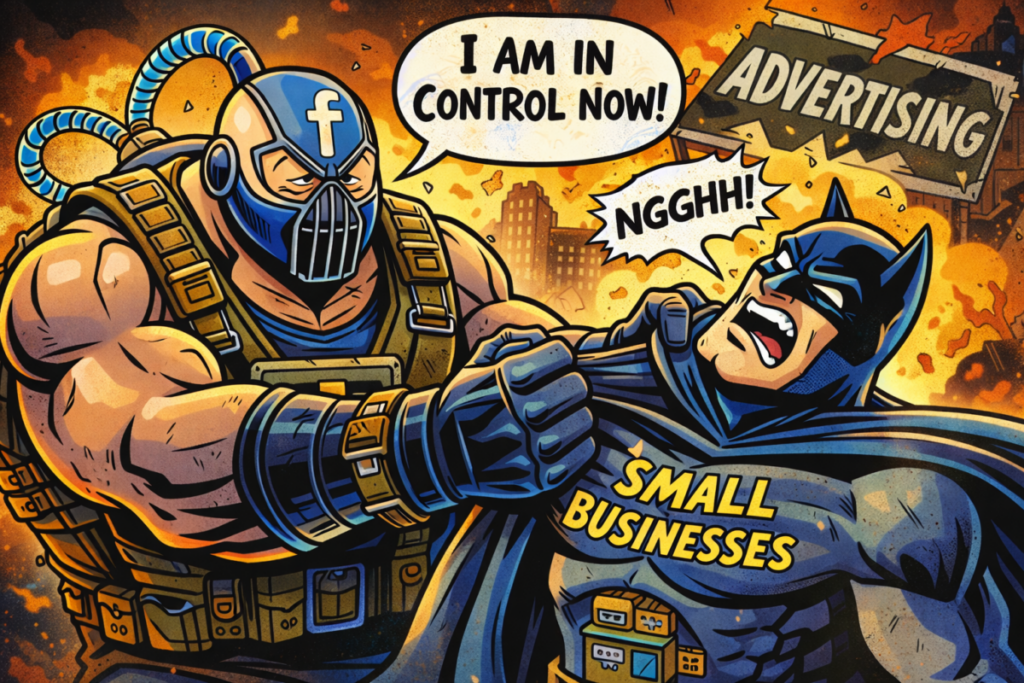
Meta’s latest platform changes are being framed as optimization. Better performance. Lower cost per acquisition. Smarter automation.
That framing is convenient. It is also incomplete.
What Meta has actually done is shift who makes the real decisions in advertising. Creative direction, testing logic, and even campaign structure are no longer primarily in the hands of advertisers. They live inside the algorithm now.
The Andromeda rollout makes that clear.
The Platform Is No Longer Optimizing Ads. It Is Selecting Them.
For years, advertisers were taught to think in terms of campaigns, ad sets, and individual creatives. Control lived in structure. You tested one variable at a time. You refined. You learned.
That mental model no longer applies.
Under Andromeda, Meta evaluates creative libraries as a whole. The unit of optimization is not an ad. It is volume. Variety. Supply.
If you are still thinking about which single creative will win, you are already behind. The system wants a pool large enough to feed its own selection process. Your job is not to pick the winner. It is to give the algorithm enough material to decide for you.
That is not collaboration. That is delegation.
Advantage Plus Is Not Optional Anymore
Advantage Plus is often described as a convenience feature. A faster way to launch. A simpler setup.
In reality, it is the default operating system.
Campaigns that resist it struggle to scale. Manual controls still exist, but they matter less with each update. Targeting, placements, and even sequencing are increasingly abstracted away.
Meta is not asking advertisers what they want to do. It is observing what performs across the network and enforcing that logic everywhere.
The signal is clear. Control slows things down. Automation keeps spend flowing.
Creative Is the Only Lever Left
As targeting and structure fade into the background, creative becomes the primary input advertisers can still influence.
Even there, the rules have changed.
Vertical video dominates because it feeds attention. Roughly ninety percent of top-performing content now runs in a nine by sixteen format. Not because brands decided it was best, but because it fits how Meta distributes content across feeds and surfaces.
Generative Ad Model tools push this further. Variants are produced automatically. Hooks, pacing, and visuals are remixed at scale. Brands that lean into this system, especially through creator partnerships, are seeing meaningful drops in acquisition cost.
That performance is real. The tradeoff is authorship.
Lower Costs Come With Higher Dependence
Advertisers using Meta’s creative automation are often rewarded quickly. Costs fall. Volume increases. Dashboards look healthier.
What gets lost in that excitement is leverage.
When creative generation, testing, and selection all happen inside the platform, advertisers become dependent on a system they do not control and cannot audit. Learning becomes opaque. Insights become harder to extract. Strategy narrows to feeding the machine.
The more you rely on Meta to decide what works, the less transferable your marketing advantage becomes.
This Is Not a Bug. It Is the Business Model.
Meta does not benefit from advertisers who slow down, overthink, or constrain spend with too much human judgment. It benefits from flow. From volume. From systems that keep budgets moving with minimal friction.
Andromeda and Advantage Plus are not about helping advertisers win. They are about helping Meta scale.
That does not make them bad. It makes them powerful.
The Mistake Advertisers Are Making
The mistake is believing that better performance metrics mean greater control.
They do not.
What is happening now is similar to what happened in search years ago. Automation promised efficiency and advertisers welcomed it. Over time, the platform absorbed more decision-making authority, and the advertiser’s role narrowed.
Meta is simply moving faster.
What Smart Advertisers Do Differently
The smartest advertisers are not fighting the system. They are separating what they let Meta control from what they refuse to outsource.
They give the algorithm volume, but they protect positioning. They let automation handle distribution, but they own creative direction. They test inside the platform, but they learn outside of it.
Most importantly, they understand that performance and power are not the same thing.
The Bottom Line
Meta’s advertising platform is no longer a tool you operate. It is an environment you operate inside.
Andromeda did not break advertising. It made the hierarchy explicit.
The platform decides what gets seen. Advertisers decide whether they still have a strategy.
Ignore that shift, and you will keep celebrating lower costs while losing control.