
Most companies think they have a content problem, but what they’re actually dealing with is something deeper. It’s not a question of output, consistency, or even creativity. It’s a question of identity. And when that piece is missing, everything downstream starts to feel off—bland posts, forgettable videos, campaigns that check all the right boxes but fail to leave any real impression.
The typical response is predictable. Companies double down on tactics. They hire someone new, invest in better tools, or commit to posting more frequently. They look for frameworks and formulas that promise engagement. But underneath all of that activity is the same unresolved issue: they haven’t clearly defined who they are or how they want to show up.
That’s why so many brands feel interchangeable, even when the production quality is high.
There’s a common belief that better content will solve this. If the visuals improve, the messaging tightens, and the strategy becomes more refined, results will follow. But that assumption only holds if the brand itself has something distinct to say. Without that, all you’re doing is producing higher-quality noise.
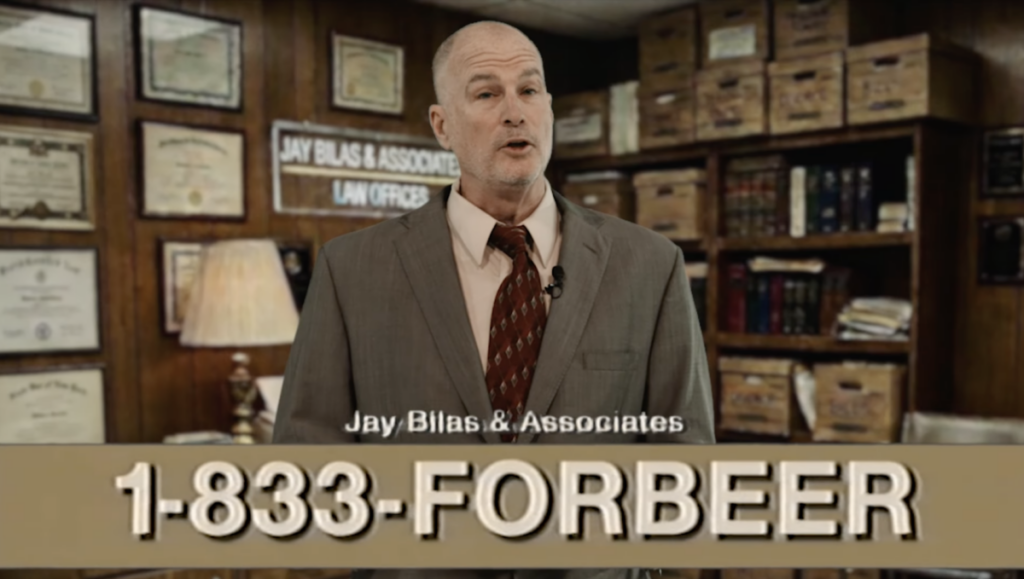
Garage Beer offers a useful contrast. On the surface, their marketing looks chaotic. They run campaigns built around absurd humor, create fictional concepts like an “Attorney at Lager” hotline, and produce content that often feels more like entertainment than advertising.
In one instance, their Super Bowl campaign leaned into crude humor that most brands would immediately reject in a boardroom setting.
Yet it works.
The reason it works has very little to do with any individual campaign. It works because everything they produce is anchored in a clearly defined identity. They’re not trying to figure out what to post next; they’re operating inside a world that already exists.
That world is nostalgic without feeling forced, absurd without being random, and grounded in a blue-collar, self-aware tone that doesn’t try to impress anyone. Because that identity is so specific, it acts as a filter for every decision they make. Ideas don’t need to be overanalyzed—they either fit or they don’t.
This is where most brands get stuck. They approach marketing as a series of isolated campaigns rather than an extension of a coherent identity. As a result, every new initiative requires fresh justification, fresh brainstorming, and fresh debate. There’s no underlying system to guide decisions, which slows everything down and dilutes the output.
Garage Beer, by contrast, moves quickly because the boundaries are already set. When something resonates—like the unexpected attention their miniature horse received during a Super Bowl spot—they don’t hesitate. They expand it into merchandise, experiences, and additional content. What looks like spontaneity from the outside is actually the result of clarity on the inside.
The cost of not having that clarity is higher than most companies realize. In an environment where attention is fragmented and feeds are saturated, playing it safe doesn’t protect you—it makes you invisible. Many brands default to being broadly appealing and inoffensive, assuming that professionalism and polish will carry the message.
But in a landscape where everyone is “doing it right,” those qualities are no longer differentiators. They’re baseline expectations.
At the same time, the rise of AI has accelerated the production of competent content. Clean visuals, structured copy, and technically sound messaging can now be generated at scale. That raises the bar for what it takes to stand out. It’s no longer enough to be good. You have to be recognizable in a way that feels distinctly human.
This is where something like Garage Beer’s approach becomes instructive. Their tone isn’t easily replicable, not because the tactics are complex, but because the identity behind them is specific and fully committed. Another brand can copy the format of a campaign, but without the same underlying personality, the result feels forced.
Smart operators understand this distinction. They don’t start by asking what kind of content they should produce. They start by defining what kind of brand they are building and what that naturally leads to. Content becomes an extension of that identity rather than a separate function.
They also shift what they optimize for. Instead of focusing purely on consistency or volume, they prioritize recognizability. The goal is not just to be present in the feed, but to be instantly identifiable when you are. That requires a level of commitment that many organizations are hesitant to make, because it means embracing trade-offs and, in some cases, alienating portions of the audience.
However, that trade-off is often where the leverage is created. A brand that tries to appeal to everyone rarely leaves a lasting impression on anyone. A brand that is specific, even at the risk of being polarizing, is far more likely to build loyalty and momentum.
Ultimately, marketing is becoming less about execution and more about clarity. The tools are widely available. The tactics are well documented. What separates effective brands from forgettable ones is not their ability to produce content, but their ability to anchor that content in a clear and consistent identity.
Garage Beer didn’t succeed because they discovered a better format or a more efficient channel. They succeeded because they know exactly who they are and are willing to express it without hesitation. In a crowded and increasingly automated content landscape, that level of clarity is not just an advantage—it’s a requirement.
Brands that recognize this will move faster, stand out more easily, and build stronger connections with their audiences. Those that don’t will continue to produce content that looks right on paper but fails to make any meaningful impact.