
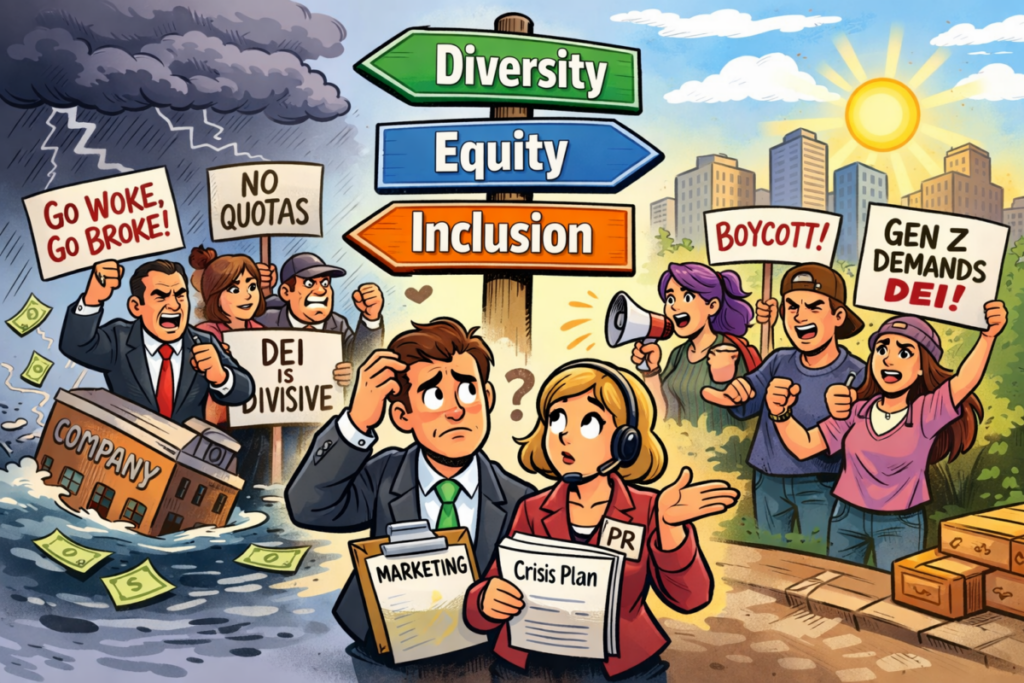
For most of the last decade, Diversity, Equity & Inclusion programs were treated as reputational insurance. Brands adopted them not because they clarified mission or improved performance, but because opting out felt risky.
That era is over.
The political and cultural climate of 2025 has turned DEI from a presumed moral good into a strategic fault line—one that brands, agencies, and PR leaders are now being forced to navigate in public.
From Consensus to Collision
President Donald Trump’s renewed and vocal condemnation of DEI initiatives has accelerated a shift that was already underway. Some companies have begun walking DEI back entirely. Others are entrenching even deeper.
The results have been uneven—and revealing.
Brands like T-Mobile have scrapped DEI programs outright. Cracker Barrel made headlines by restoring an older logo design, a move widely interpreted as a retreat from progressive brand signaling. In both cases, the backlash was immediate: online criticism, calls for boycotts, and vocal pushback from Gen Z consumers—a demographic marketers still prize heavily.
The message to brand leaders is clear: abandoning DEI is no longer a quiet internal decision. It’s a public stance, whether intended or not.
Why DEI Became a Branding Problem
The core issue isn’t diversity itself. Most consumers—and most businesses—understand the value of welcoming talent and customers from all backgrounds.
The friction comes from how DEI has been operationalized.
Over time, many initiatives shifted away from individual merit, character, and competence toward group-based frameworks that treat people as demographic categories rather than individuals. That approach may satisfy activists, but it creates real problems for brands:
- Employees feel reduced to checkboxes
- Customers sense inauthenticity
- Messaging becomes rigid and scripted
- Critics gain an easy target
When inclusion stops being about opportunity and starts being about quotas, brands lose narrative control.
PR Professionals Are Caught in the Middle
Communications leaders aren’t blind to this tension.
The Public Relations Society of America addressed the issue head-on at its ICON 2025 Conference. Through initiatives like Voices4Everyone, PRSA has attempted to help practitioners manage polarization, clarify messaging, and reduce reputational risk in a climate where almost every statement is interpreted politically.
That alone tells you something important: DEI is no longer just an HR issue. It’s a communications risk variable.
The Gen Z Pressure Point
Brands that exit DEI frameworks often face their fiercest resistance from Gen Z audiences—digitally native, values-driven, and highly vocal online. For companies that rely on youth culture, social platforms, or lifestyle branding, this backlash can be costly.
But there’s a quiet counter-trend happening at the same time.
Many consumers—across age groups—are growing fatigued with moralized brand messaging that feels disconnected from product quality, service, or value. They don’t want corporations acting as cultural referees. They want competence, fairness, and respect—without ideological lectures.
That’s the tension brands must now resolve.
The Strategic Reality Going Forward
The takeaway for marketers and PR teams isn’t “embrace DEI” or “abolish DEI.” It’s this:
Symbolic positioning without operational clarity is no longer sustainable.
Brands that survive this moment will:
- Speak in human terms, not ideological jargon
- Focus on equal opportunity rather than enforced outcomes
- Emphasize character, performance, and trust
- Avoid treating identity as a marketing asset
In other words, they’ll return to fundamentals.
Marketing Takeaway
DEI has shifted from a reputational shield to a reputational gamble. The brands struggling most are the ones that adopted it for optics rather than principle—and now can’t explain their position without alienating someone.
In a fractured cultural landscape, credibility doesn’t come from choosing the loudest side. It comes from clarity, consistency, and treating people as individuals—not commodities.
That’s not just good marketing, it’s good ethics.