
Every few months the internet finds something new to argue about. This week it was Chuck E. Cheese. Yes, that Chuck E. Cheese—the giant pizza-loving rodent who has spent the last four decades presiding over chaotic birthday parties, sticky arcade machines, and the unmistakable smell of slightly overcooked pizza.
A video recently made the rounds online showing the Chuck E. Cheese mascot lining up to kick one of those arcade soccer balls when a kid suddenly darted into the danger zone at the last second and took a light kick in the process.
Chuck E. Cheese accused of kicking a kid — it was all caught on camera! 👀🧀
— Rain Drops Media (@Raindropsmedia1) March 16, 2026
pic.twitter.com/1EewuZhBBA
Within minutes the internet turned into a courtroom.
Commenters analyzed the clip frame by frame like it was the Zapruder film, debating whether Chuck had reckless intent, whether the kid was out of position, and whether anyone inside that massive foam mouse head can actually see anything beyond a few inches in front of them.
The consensus from most of the comment section was surprisingly calm. Chuck was innocent. Being a six-foot rat wearing a mascot helmet probably limits your peripheral vision. Case closed.
Honestly, I’ve laughed too hard at this video.
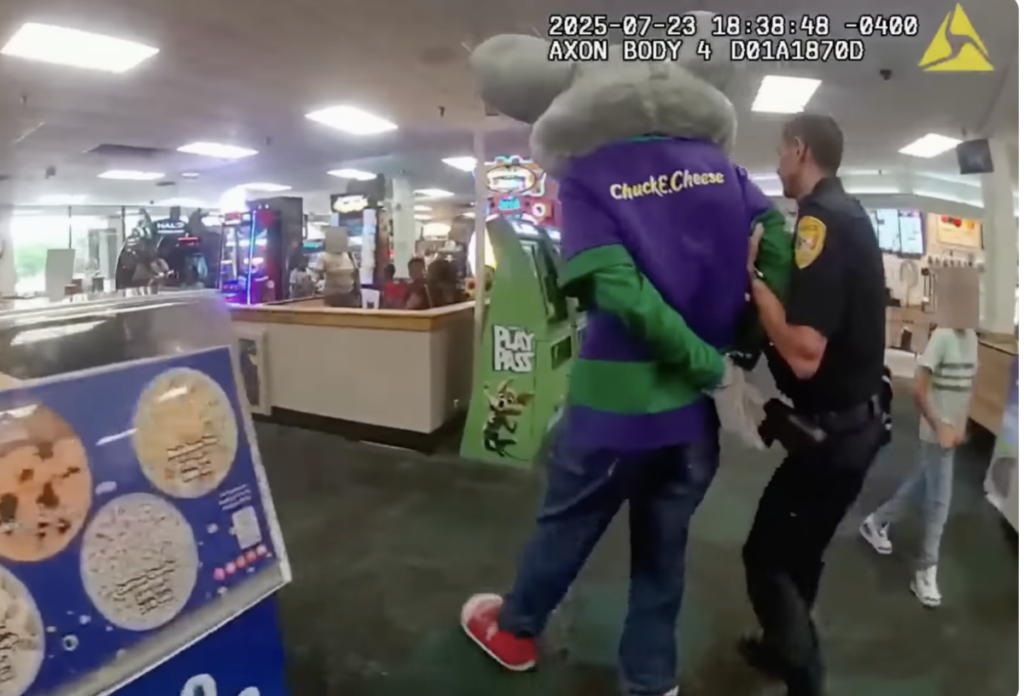
It is almost as funny as Chuck getting arrested a while back.
But while the internet was busy conducting its mascot trial, something far more interesting has been happening behind the scenes. Chuck E. Cheese has quietly been staging one of the more unexpected brand comebacks in the restaurant and entertainment world, and the reason why says a lot about how real marketing turnarounds actually work.
The Big Picture
A few years ago the brand looked like a relic from another era. For a long time Chuck E. Cheese had slowly drifted into becoming the punchline to jokes about mediocre pizza and broken arcade machines. Then in 2020 the company filed for bankruptcy, wiping out roughly $700 million in debt and emerging from Chapter 11 with a serious question hanging over the brand: what exactly is Chuck E. Cheese supposed to be now?
Many struggling companies answer that question the same way. They try to crank up the marketing machine with more advertising, more social media, and more promotional gimmicks. Chuck E. Cheese took a different approach. Instead of focusing first on the messaging, the company rebuilt the experience.
Over the past several years the company invested hundreds of millions of dollars upgrading locations across the country. Stores were remodeled with updated layouts, modern arcade technology, trampoline areas, and what the company calls “Adventure Zones” designed for active play. The physical environment shifted away from the old pizza-parlor model and toward something closer to a family entertainment center.
That shift may sound subtle, but it fundamentally changed the story the company could tell. Chuck E. Cheese stopped acting like a pizza restaurant that happened to have games and started positioning itself as a family entertainment destination that also serves food. Once the experience improved, the marketing suddenly had something real to talk about.
The company also began experimenting with smarter revenue models designed to increase repeat visits. One of the biggest moves was launching a national Fun Pass membership program that reportedly attracted around 200,000 members in its first six months. That program encourages families to come back regularly rather than treating the venue as a once-a-year birthday party destination.
At the same time, the brand simplified its offers for parents. A $99 birthday party package gives families a clear, easy-to-understand option that works as a simple marketing hook across digital ads, email campaigns, and social media. The company has also explored partnerships, retail products, and digital engagement aimed squarely at Gen Alpha families who expect entertainment experiences that compete with what they see online.
The Turnaround
The results have been noticeable. Revenue climbed to roughly $1.2 billion in recent years even though the company now operates fewer locations than it did before the pandemic. In other words, the strategy wasn’t about rapid expansion. It was about improving the experience in the stores that remained.
This is the part of the story that most businesses miss. When sales slow down, companies tend to assume the solution is more marketing. They increase ad spend, ramp up social media activity, and launch new promotional campaigns in the hope that attention alone will solve the problem.
But marketing can only amplify what already exists. If the product is weak, marketing simply spreads that weakness faster. If the experience is confusing or disappointing, marketing amplifies the confusion. The companies that actually pull off turnarounds usually start somewhere else. They improve the product, upgrade the experience, and clarify what customers should actually say about them.
Only after those things improve does marketing begin to act like leverage.
Chuck E. Cheese didn’t revive its brand because someone wrote clever ad copy or launched a viral social media campaign. The company revived the brand because it rebuilt the experience customers encounter when they walk through the door.
Ironically, the recent viral video of the mascot kicking the soccer ball illustrates the point perfectly. Moments like that only travel across the internet when people are paying attention to the brand again. For years Chuck E. Cheese had largely faded into the background of American culture. Now the brand is part of the conversation again.
Some of that attention comes from remodeled stores, upgraded entertainment options, and a clearer identity as a family activity destination. Some of it comes from the internet joking about a giant mouse accidentally kicking a soccer ball into a kid. But both forms of attention point to the same reality: people are looking at the brand again.
And attention is the raw material marketing works with.
The lesson for business owners is straightforward. Great marketing rarely begins with marketing. It begins with something worth talking about. Chuck E. Cheese didn’t engineer a comeback through clever campaigns or viral stunts. It rebuilt the experience customers interact with, and once that foundation improved, the marketing started to work again.
If your marketing efforts feel like they’re producing little return, the problem may not be the ads or the copy. The real issue might be the system behind them. When that system improves—when the product, experience, and positioning become stronger—marketing stops feeling like an expense and starts acting like leverage.